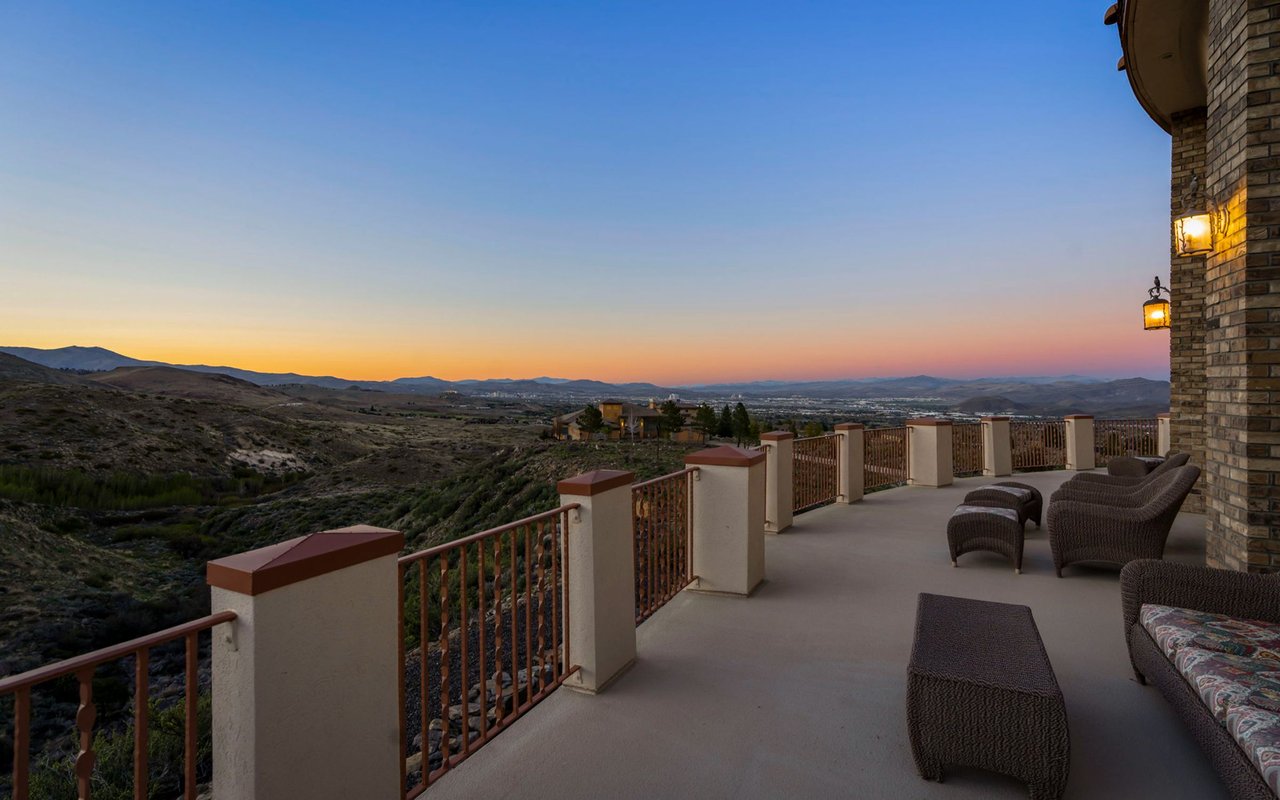
In September 2020, the Reno Gazette Journal reported that a 1,130-acre tract running from Old U.S. 395 up through St. James's Village to its western edge had come to market at $50 million, with Bryan Drakulich holding the listing. The newspaper described the western portion as able to hold about 220 homes on lots of at least one acre, and said those sites were the rest of what could still be built in St. James's Village.
Washoe County's 2025 development-agreement file still names St. James's Village, Inc. as the owner of about 1,161 remaining acres. In that file, the developer ties the next phase to public sewer and water work, including a sewer line that at the time had not yet been extended west of I-580. For a buyer comparing south Reno communities this winter, that matters more than any single listing price. For now, the number of St. James's Village lots that can be bought is fixed, and the pipe schedule decides when it grows.
The community exists on paper at about half its planned size
St. James's Village has been in the works for more than three decades. Nevada Business reported in 2000 that National Land Corporation had owned the property since the early 1970s, that the project started in 1993, and that sales began in early 1994. The original tentative map, approved by the Washoe County Board of County Commissioners on Aug. 18, 1992, allowed 530 residential lots.
I-580 changed that number. According to the county agreement, the Nevada Department of Transportation took 79 acres for right-of-way, and the freeway cut off another 224.1 acres on its east side. Build-out is now planned at about 450 lots.
Over the years the developer recorded 14 final maps, which created 256 legal residential lots. Three of those maps were reverted in 2011, which removed 29 lots. The county document puts the current total at 227 recorded residential lots.
Every finished home and every vacant homesite for sale in St. James's Village today sits on one of those 227 lots. The other two hundred or so planned homesites have not yet been created, so no one can buy or build on them. The HOA describes homesites of at least one acre spread across roughly 1,600 acres, and much of that ground is still waiting for its phase.
The next phase is a pipe and well project
In the 2025 filing, the developer said more time was needed "to work through final engineering and construction issues related to the provision of public water and public sewer for the remaining phases of this development before filing and recording the next Final Map."
The sewer work centers on the Reach IV Pleasant Valley Interceptor. The application reported that the landowner had finished a 30% design of the line and planned to start construction by fall 2026. According to the same document, homes in the village use septic systems today, and every existing lot already has a dry sewer line run to the home for a future hookup once public sewer reaches the village.
The water work is the second part. The application describes the Truckee Meadows Water Authority and the landowner preparing a "Water Discovery" for the remaining phases. The plan adds looping and new or improved wells to the original "tree" system, which is a single branching line. The developer describes the result as better water pressure and redundancy for existing residents, along with public sewer service available to every current home.
Washoe County's records show the agreement, case WAC25-0011, was approved after readings on Sept. 9 and Oct. 14, 2025. The agreement sets Oct. 16, 2027, as the date for the next final map.
A buyer's three options, read against that timeline
Because supply depends on that sequence, a buyer in St. James's Village really has three different purchases to consider, each on its own clock.
A finished home. A resale home already sits on one of the 227 recorded lots, so the next phase does not hold it up. It also stands to gain from the planned sewer and water improvements, which the developer describes as serving existing homes. During escrow, it is reasonable to ask how the home's septic system is set up and where its dry sewer line sits on the lot. Those details vary from house to house more than the market does.
A vacant recorded lot. A homesite on one of the 227 lots is the second option, and it comes with costs beyond the land. The HOA's Design Documents Review Application lists a $2,000 design review fee and a $15,000 construction deposit for a new home, as shown on the form current this November. This post is general information and not legal, tax or financial advice, so confirm the current figures with the association manager, Western Nevada Management, and with your own advisers before you commit.
The full cost of building has always been far higher than those fees. In its 2020 coverage, the RGJ reported that a new home in St. James's Village, lot included, started at more than $1 million. That figure is from 2020, and building here was a luxury decision even then. In the same article, Drakulich pointed to the range of architecture inside the gates, from Tuscan to storybook turrets to Asian Craftsman to glass and steel, and called it "the ability to build what you want to build." A lot buyer gets that freedom, but only on a lot that already exists.
Waiting for a new phase. The third option depends on construction, not a sales calendar. The developer has tied the next homesites to the Reach IV sewer line and the water upgrades, and the county agreement names Oct. 16, 2027, for the next final map. Until new lots are recorded, the market is the 227 lots that exist now.
What the fixed count means for pricing
A community where new supply waits on infrastructure prices a little differently from one where a builder can release a new phase whenever demand rises. In St. James's Village, the 227 recorded lots are effectively the whole inventory until the next map is recorded. Every resale home and every vacant homesite competes only against the others in that group. That is one reason a resale here deserves pricing work based on comparable sales inside the gates rather than a valley-wide average, a point we covered in how St. James's Village sales move through appraisal and HOA paperwork.
For a current owner, the same timeline points to improvements. The developer's 2025 application links completing the village to public sewer access through lines already run to each home and to a water system with looping and added wells.
If you are deciding between a finished home and a homesite in St. James's Village, or want to know how the next phase fits your own timeline, Bryan Drakulich has worked with this land since before the 2020 listing and can show you which recorded lots fit the way you want to live. Start with our St. James's Village neighborhood guide, browse current St. James's Village homes for sale, or contact Bryan Drakulich to plan a lot purchase, a build or a sale with the full picture in hand.